High-precision instruments for air quality monitoring, particle measurement, and environmental analysis – built for reliability, accuracy, and compliance.
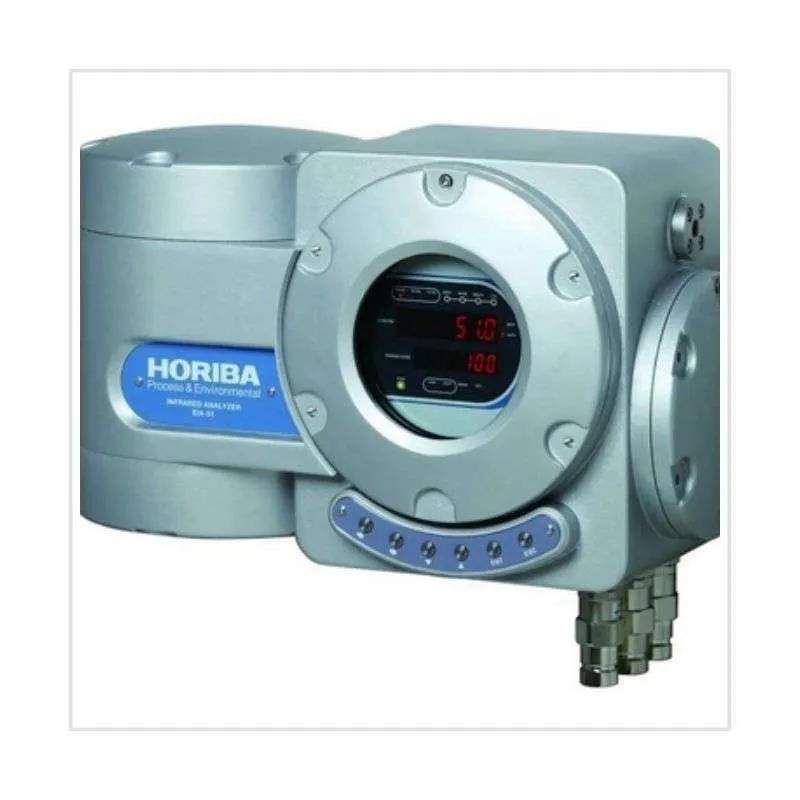
In hazardous industrial environments, balancing accurate gas composition tracking with strict explosion safety protocols is a primary operational challenge. The HORIBA 51 Series explosion-proof gas analyser addresses this critical need. Designed for installation directly within classified hazardous zones, this process gas analyser delivers real-time, continuous tracking of critical gas components such as hydrogen ($\text{H}_2$), oxygen ($\text{O}_2$), carbon monoxide ($\text{CO}$), carbon dioxide ($\text{CO}_2$), and methane ($\text{CH}_4$). By providing reliable analytical insights where flammable mixtures or explosive vapors are commonplace, the series assists plant operators in safeguarding high-value assets, optimizing chemical reactions, and monitoring feedstock purity.
The HORIBA 51 Series leverages a multi-detector platform, allowing the analytical mechanism to match the specific demands of the process stream. Depending on configuration, the analyser incorporates one of several proven technologies:
Thermal Conductivity Detector (TCA-51): This configuration is dedicated primarily to $\text{H}_2$ measurements. By evaluating differences in thermal conductivity between the active sample stream and a reference standard, it provides highly precise binary and pseudo-binary mixture analysis. It is an excellent choice for tracking hydrogen purity in chemical synthesis or air separation utilities.
Paramagnetic & Magneto-Pneumatic Detectors (PMA-51 / MPA-51): Utilized for high-precision $\text{O}_2$ analysis. Unlike electrochemical alternatives that suffer from sensor depletion, paramagnetic technology exploits the unique magnetic susceptibility of oxygen molecules, delivering a non-depleting, long-term stable measurement ideal for safety-critical blanketing or process control applications.
Non-Dispersive Infrared (NDIR): Deployed for infrared-active molecules such as CO2 and CH4
To maintain baseline stability in complex process matrices, the series features integrated background gas compensation. A dedicated correction or compensating detector mitigates the cross-sensitivity effects of overlapping gases, preventing false readings and ensuring high measurement fidelity.
Operating in atmospheres where explosive gas-air mixtures may occur requires robust equipment isolation. The HORIBA 51 Series uses a safety-certified pressurized enclosure design compliant with IEC 60079 principles. By maintaining an internal overpressure using a protective purge gas (such as nitrogen or clean air), the system prevents the ingress of external flammable vapors into the electrical housing.
For seamless plant control, the industrial gas analyser is designed for straightforward integration into modern Distributed Control Systems (DCS) and SCADA infrastructures. Real-time data transmission ensures that concentration thresholds can trigger immediate, automated safety or process corrections. Locally, the unit features a high-visibility LED display that allows field technicians to check primary gas levels and active unit status safely within the process area.
The HORIBA 51 Series is highly relevant for the dense refining and chemical hubs across Belgium, the Netherlands, and Luxembourg—such as the Port of Antwerp-Bruges and the Rotterdam industrial clusters.
Refinery and Petrochemical Streams: Monitoring hydrogen recycle gas, tail gas units, or off-gases where hydrocarbon presence requires rigorous explosion-proof equipment.
Hydrogen Infrastructure & ASU Plants: Purity monitoring within Steam Methane Reformers (SMR) and Air Separation Units (ASU) to ensure gas quality before distribution.
Liquid Natural Gas (LNG) Processing: Verifying composition and safety parameters during liquefaction, storage, and regasification phases.
Maximizing uptime and avoiding unplanned process shutdowns are critical priorities for maintenance teams. The 51 Series includes built-in internal management tools designed to simplify field maintenance and support operational continuity:
Automated Self-Diagnosis: The analyser continuously monitors its internal operational parameters. If it detects an abnormal condition, it immediately triggers a diagnostic alarm, allowing technicians to rectify issues before they cause process deviations.
Calibration Factor Tracking: The device archives calibration history data. This allows instrument engineers to track long-term sensor drift, plan preventive maintenance schedules accurately, and verify overall loop performance.
Sample Stream Preservation: To protect the internal optical and thermal sensing elements, the sample conditioning system must deliver a clean gas stream free of mists and heavy particulate matter, typically regulated at a stable flow rate of approximately 500 mL/min (model dependent).
Deploying hardware in classified areas across the Benelux region requires strict adherence to regional safety directives and environmental framework regulations:
ATEX & IEC 60079 Standards: Alignment with international explosion protection guidelines ensures compliance with mandatory industrial safety directives for European hazardous zones.
Industrial Emissions Directive (IED) & VLAREM (Flanders): While primarily used for process control and safety, the precise measurement logs provided by the analyser support overall plant mass-balance tracking, helping facilities adhere to strict operational operating permits and safety reports required for major hazard (Seveso) installations.
AAVOS supports industrial operators across Belgium, the Netherlands and Luxembourg with analyser selection, integration support and environmental or process monitoring expertise. Our team ensures that sophisticated process analytical hardware is correctly configured, packaged, and integrated into your specific industrial framework to deliver long-term, reliable service.
How does the HORIBA 51 Series handle background gas interferences? The analyser uses a specialized correction or compensating detector mechanism. This architecture isolates and mathematically offsets the cross-sensitivity effects caused by non-target background gases within the process stream, ensuring high measurement precision.
What are the sample gas requirements for this analyser? The incoming sample gas must be properly conditioned to remove any liquid mists, moisture droplets, or dust particles. For stable analytical performance, the sample delivery system should maintain a regulated flow rate of approximately 500 mL/min depending on configuration.
What safety certifications govern the 51 Series for explosive areas? The analyser satisfies international IEC 60079 explosion-proof requirements and features certified pressurized protection methods, making it suitable for deployment in designated flammable and explosive classified industrial atmospheres.
Brand: HORIBA
Measured Components: H2, O2, CO, CO2, CH4, and organic gases (Model dependent)
Applications: Process gas analysis, safety blanketing monitoring, feedstock purity tracking, hazardous area process safety
Measurement Principle: Thermal Conductivity (TCD), Paramagnetic, Magneto-pneumatic, Non-Dispersive Infrared (NDIR) (Depending on configuration)
Certifications: IEC 60079 compliant, JPEx certified
Industrial Sectors: Refineries, Chemical Industry, Petrochemical, Hydrogen production (SMR/ASU), LNG processing
Integration Possibilities: Distributed Control Systems (DCS), SCADA systems, analogue and digital automation infrastructures
Maintenance Considerations: Self-diagnosis functionality, calibration factor historical logging, sample conditioning management
Regulatory Relevance: ATEX Directive, IEC 60079, EU Industrial Emissions Directive (IED), VLAREM safety and operational compliance frameworks
Nous utilisons des cookies pour vous offrir une meilleure expérience utilisateur sur ce site web. Politique de cookies