High-precision instruments for air quality monitoring, particle measurement, and environmental analysis – built for reliability, accuracy, and compliance.
Maintenance-Free Fractionator for FRM & Speciation Sampling
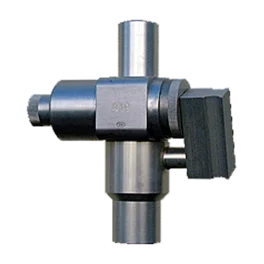
The PM2.5 Sharp Cut Cyclone (SCC) is the industry-standard upgrade for regulatory and research-grade particulate matter sampling. Designed to operate at the Federal Reference Method (FRM) flow rate of 16.67 LPM, this inertial fractionator delivers a precise aerodynamic cut-point of 2.5 µm, separating fine particulate matter from coarser aerosols with high efficiency.
Engineered as a direct "drop-in" replacement for the legacy WINS (Well Impactor Ninety-Six) impactor, the SCC eliminates the operational headaches of oil-based separation. By utilizing dry cyclonic technology, it ensures data integrity for Ambient Air, Indoor Air Quality (IAQ), and Chemical Speciation applications while drastically reducing site visit frequency.
Zero-Oil Operation: Unlike the WINS impactor, which utilizes oil-soaked filters that can degrade and cause carry-over, the SCC is a completely dry system. This eliminates the risk of sample contamination—critical for chemical speciation and carbon analysis.
Extended Maintenance Intervals: The WINS impactor requires cleaning every 5 days.2 The SCC allows for continuous operation for up to 30 to 90 days (depending on mass loading) before cleaning is required, significantly lowering labor costs and downtime.
Tool-Free Upgrade: Designed with identical geometric dimensions to standard FRM impactors, the SCC can be installed into existing sampling hardware in minutes without the need for tools or adapters.3
Precise Cut Curve: The aerodynamic geometry provides a sharper efficiency curve than traditional impactors, reducing particle bounce and re-entrainment artifacts that can skew mass concentration data.
The PM2.5 SCC operates on the principle of inertial separation. As the sample air stream enters the cyclone body at 16.67 LPM, it is accelerated into a vortex. Large particles (coarser than 2.5 µm) cannot follow the tight streamlines due to their inertia and are deposited into the grit pot . The fine fraction (PM2.5) follows the air stream upward to the 47mm filter holder for analysis.4
Configuration Flexibility:
Standard FRM Mode: Replaces WINS in determining compliance with National Ambient Air Quality Standards (NAAQS).5
"Type 3" Sampling: Configurable for specialized speciation networks (e.g., IMPROVE or STN) where specific downtube geometries are required.
Material Construction: Precision-machined stainless steel or anodized aluminum ensures chemical inertness, preventing reaction with reactive gases (like nitric acid) during speciation sampling.
Regulatory Compliance Networks: U.S. EPA Federal Reference Method (FRM) and Federal Equivalent Method (FEM) monitoring sites.6
Chemical Speciation: Collecting pure PM2.5 samples for elemental analysis (XRF), ions (IC), and carbon (TOR/TOT) without oil interference.7
Indoor Air Quality (IAQ): High-precision separation for identifying indoor pollutant sources in occupational health studies.
Background Monitoring: Long-term deployment in remote locations where frequent maintenance trips are logistically impossible.
The PM2.5 SCC transforms a labor-intensive sampling site into a robust, autonomous station. For site operators, the switch from WINS to SCC means fewer site visits, no messy oil handling, and higher data capture rates. For data analysts, it means cleaner samples with no organic artifacts from impactor oil, ensuring that the mass on the filter represents the atmosphere—and nothing else.
Measured Components:
Fine Particulate Matter (PM2.5).
Applications:
Ambient Air Monitoring (FRM/FEM), Chemical Speciation, Indoor Air Quality, Research.
Certifications:
U.S. EPA FRM/FEM Compatible (Designated for use in EPA-approved samplers); ISO 21501-4 (Performance typically aligns with ISO standards for cutoff characteristics).8
Measurement Principle:
Inertial Cyclonic Separation (Dry fractionation).
Nous utilisons des cookies pour vous offrir une meilleure expérience utilisateur sur ce site web. Politique de cookies