High-precision instruments for air quality monitoring, particle measurement, and environmental analysis – built for reliability, accuracy, and compliance.
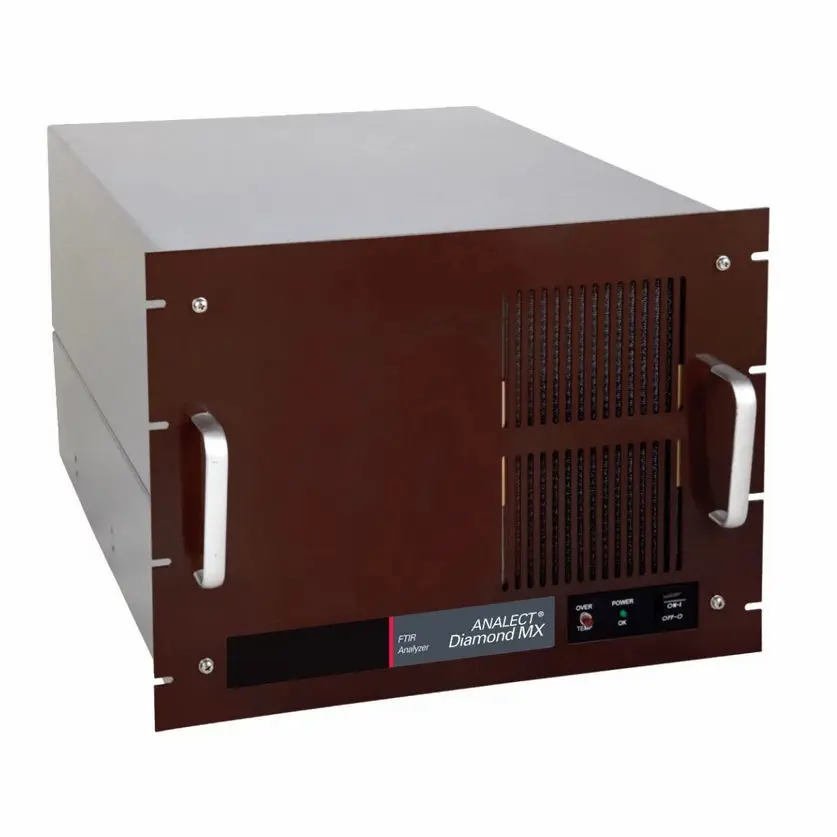
The Diamond MX is a benchtop FTIR/FT-NIR analyser built for the lab bench and for rugged at-line duty next to the process. Process Insights positions it as the calibration and applications-development partner for its ANALECT range of on-line continuous and batch analysers, so models built on a Diamond MX transfer straight to the process instrument it supports. One optical bench covers both mid-IR and near-IR measurement of physical properties and chemical composition in liquids and solids.
Process Insights lists the Diamond MX across labs, refinery and petrochemical operations, raw materials QC, general chemical manufacturing, pharmaceuticals, paint and coating, film extrusion and fibre webs, agricultural chemicals and polymers. The refinery use case is where it sees the heaviest deployment: fuels blending and component-stream analysis, with reference customers including ADNOC, BP, CITGO, CPCL, HPCL, IOCL, Orpic, Phillips 66, Rompetrol, Statoil, PBF Energy and Tesoro, according to Process Insights. Reaction monitoring is also supported directly through the software layer described below.
Refinery and petrochemical labs building or maintaining calibration models for on-line process analysers; QC labs running routine composition checks on raw materials or finished product; and process chemists who need one instrument covering both mid-IR and near-IR without swapping benches.
The Transept interferometer uses a refractively scanned, vibration-tolerant wedge design rather than a moving mirror, which is what lets Process Insights claim the wave-number repeatability and long-term optical stability behind the calibration-transfer story. The bench accepts a wide range of MIR and NIR sampling and detector options and routes the IR beam to whichever sampling peripheral is attached through the ANALECT Optibus light conduit — including fibre-optic probes, ATR accessories, flow cells and gas cells, so the same optical bench can be reconfigured for very different sample types without a new instrument.
SpectraStudio is the Windows-based data collection and analysis package for the lab environment: real-time process analysis, model development, data acquisition, validation routines and environmental reporting, with an automatic audit trail that logs every change made to a data set — useful where a regulated QC process needs to show its working. Spectra can be overlaid, stacked or superimposed for visual comparison, and the toolset covers mid-infrared spectral manipulation and analysis routines.
Full chemometric modelling is supported through Process Insights' own ANALECT SpectraQuant package as well as third-party platforms: Eigenvector PLS Toolbox and Solo, CAMO Unscrambler, MATLAB, Infometrix Pirouette and GRAMS PLSiQ. For process application development specifically, ANALECT SpectraRTS and SpectraQ handle the transition from lab-built model to on-line deployment.
Note on source: the datasheet linked from the live Diamond MX page is currently published under the file name and header "Diamond 20." The product page text describes the Diamond MX as carrying the newer DCM 600 data collection module, while the linked datasheet lists DCM 400 as standard with DCM 600 as an upgrade. The specification table below is taken directly from that datasheet — confirm with Process Insights whether Diamond MX is the DCM 600-equipped successor to Diamond 20 sharing the same optical bench, or whether a Diamond MX-specific datasheet exists that AAVOS should link instead.
Is the Diamond MX suited to on-line process monitoring, or lab use only?
It's built for the lab bench and rugged at-line environments, and Process Insights positions it specifically as the calibration-development partner for its on-line ANALECT process analysers — so it's the instrument you build and validate a model on before deploying that model to a continuous on-line unit.
Can we use our existing chemometrics software with it?
Yes. Alongside Process Insights' own SpectraQuant package, the Diamond MX supports Eigenvector PLS Toolbox and Solo, CAMO Unscrambler, MATLAB, Infometrix Pirouette and GRAMS PLSiQ.
What sample types can it handle?
Both liquids and solids, across mid-IR and near-IR, using accessories ranging from ATR probes and diffuse reflectance to fibre-optic probes, flow cells and gas cells routed through the Optibus light conduit.
How does the Diamond MX relate to the Diamond 20?
The current datasheet on Process Insights' site is titled "Diamond 20" and lists the DCM 400 data collection module as standard, while the Diamond MX product page describes the newer DCM 600 module as standard with an upgrade path from DCM 400. We'd confirm the exact relationship between the two model names with Process Insights before quoting.
Does it hold any specific certifications or standards?
Not stated on the manufacturer's product page or datasheet — worth confirming directly with Process Insights if a specific certification (ATEX, for example) is required for your installation.
What does installation and ongoing support look like through AAVOS?
AAVOS handles advice, installation, commissioning, calibration and maintenance locally in Belgium, the Netherlands and Luxembourg, so support doesn't route through Process Insights' regional offices for routine questions.
How do we get pricing and lead time?
Contact our specialists with your application details — sample type, required range and existing chemometrics software — for a quotation.
AAVOS distributes the Process Insights and ANALECT range across Belgium, the Netherlands and Luxembourg, and provides advice, installation, commissioning, calibration and technical support locally rather than through Process Insights' EMEA office in Frankfurt. For an instrument this tied to calibration-model development, having a Benelux contact who can walk through sampling accessory choices and chemometrics software compatibility before purchase matters as much as post-sale support.
Contact our specialists to talk through your sample types and calibration workflow, or submit a support request if you're already running a Diamond MX or another ANALECT analyser.
Nous utilisons des cookies pour vous offrir une meilleure expérience utilisateur sur ce site web. Politique de cookies