High-precision instruments for air quality monitoring, particle measurement, and environmental analysis – built for reliability, accuracy, and compliance.
Eight-Channel Aerosol Profiling for Harsh Outdoor Environments
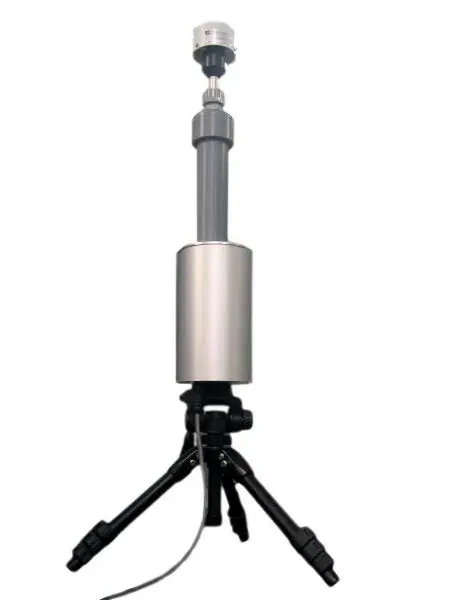
The Met One Model 212 is a ruggedized, multi-channel optical particle counter designed specifically for determining the particle size distribution of ambient aerosols in challenging field conditions. Unlike standard nephelometers that provide a single mass concentration, the Model 212 utilizes pulse-height analysis to sort airborne particles into eight distinct size channels simultaneously.
Engineered for reliability in remote and unattended applications, this instrument bridges the gap between scientific research profilers and industrial dust monitors. Its weatherproof enclosure and integrated sheath air system make it an ideal solution for environmental researchers, air quality consultants, and site operators requiring detailed granular data on suspended particulate matter (PM) ranging from 0.3 µm to 10 µm.
Granular Particle Size Distribution: With eight user-configurable size bins, the Model 212 allows operators to "fingerprint" emission sources by analyzing the ratio of fine (sub-micron) to coarse particles, rather than just reporting a total mass aggregate.
Extended Maintenance Intervals: The instrument features advanced Sheath Air Technology. This system surrounds the sample flow with a curtain of clean filtered air, preventing abrasive or sticky particles from contacting the sensitive internal optics. This significantly reduces drift and cleaning requirements in high-pollution environments.
Rapid Field Deployment: Designed as a self-contained unit, the Model 212 can be easily mounted on tripods, poles, or walls. Its "power-on and measure" architecture requires minimal setup time.
Flexible Data Integration: The unit provides straightforward serial data output, allowing seamless connection to external data loggers, PCs, or telemetry systems. It is protocol-ready for integration into larger meteorological or air quality stations.
The Model 212 operates on the principle of Light Scattering (Optical Particle Counting). Ambient air is drawn into the sensor module where it passes through a focused laser diode beam. As particles traverse the beam, they scatter light in patterns proportional to their geometric size.
Signal Processing:
High-speed photodetectors convert these light pulses into electrical signals. The internal processor categorizes each pulse into one of eight digital bins. This allows for the simultaneous counting of multiple particle fractions (e.g., PM0.5, PM1, PM2.5, PM10) within a single sampling cycle.
Environmental Hardening:
Unlike laboratory counters adapted for outside use, the Model 212 is built from the ground up for the outdoors. The optics and electronics are housed in a weather-resistant shell, and the internal pump is rated for continuous operation. The sheath air flow design is critical for maintaining calibration stability when monitoring coarse dust or oily mists that would foul standard sensors.
Source Apportionment Studies: Differentiating between combustion smoke (fine mode) and mechanically generated dust (coarse mode) in mixed-use industrial zones.
Baseline Air Quality Surveys: conducting rapid environmental impact assessments (EIA) prior to construction or mining projects.
Climate & Aerosol Research: Gathering size-segregated data for atmospheric modeling and visibility studies.
Process Monitoring: Tracking particle size shifts in filtration systems or perimeter monitoring around dust-generating activities.
The Met One Model 212 is selected by professionals who need more than just a "PM2.5 number." It is chosen for applications where understanding the morphology and distribution of the aerosol cloud is necessary for decision-making. Its combination of the proprietary sheath air system and a weatherproof form factor ensures that the data remains defensible and accurate, even when deployed in environments that would incapacitate standard optical counters.
Measured Components:
Airborne Particulate Matter (Particle Counts per Size Bin).
Configurable across 8 channels (Typical range: 0.3 µm – 10 µm).
Applications:
Ambient background monitoring, aerosol research, meteorological stations, industrial perimeter sizing.
Certifications:
CE Marked; ISO 21501-4 compliant calibration (optional/model dependent); NIST-traceable calibration standards.
Measurement Principle:
Laser Diode Optical Particle Counter (OPC) with Sheath Air protection.
Nous utilisons des cookies pour vous offrir une meilleure expérience utilisateur sur ce site web. Politique de cookies