Skip to Content
  • Process & Environmental Analysis Turnkey Monitoring Solutions Expert Support
  • HELPDESK
AAVOS process & environmental analysers
  • 0
    My Cart
  • NL EN FR
  • Sign in
  • Home
  • About
  • Products
  • Turnkey
    • General Turnkey Solutions
    • Advanced Tactical Monitoring
  • More
    Contact Support Request Terms Privacy
    Brochure Process Brochure Environmental Blog
      Questionnaire Process Questionnaire CEMS

    The Analysers

    High-precision instruments for air quality monitoring, particle measurement, and environmental analysis – built for reliability, accuracy, and compliance. 

    Discover Them
AAVOS process & environmental analysers
  • ​ 0
    • Home
    • About
    • Products
    • Turnkey
      • General Turnkey Solutions
      • Advanced Tactical Monitoring
    • More
  • Process & Environmental Analysis Turnkey Monitoring Solutions Expert Support
  • NL EN FR
  • Sign in
  • HELPDESK
  1. All products
  2. Environmental Analyzers
  3. Gas chromatography
  4. Chromatotec autoGCMS 866 VOC Analyser
  5. Gas chromatography
Pricelist: E-commerce Prijslijst Pricelist
E-commerce Prijslijst E-commerce Prijslijst
Pricelist: E-commerce Prijslijst Pricelist
E-commerce Prijslijst E-commerce Prijslijst
Chromatotec autoGCMS 866 VOC Analyser

Chromatotec autoGCMS 866 VOC Analyser

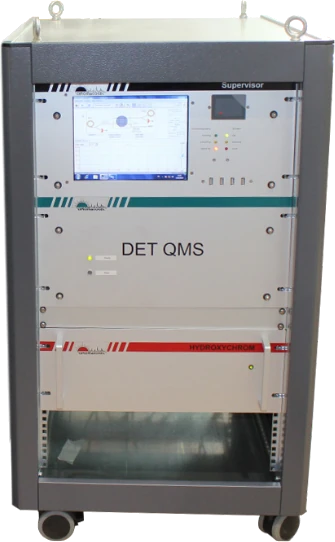
Continuous VOC speciation is one of the more demanding tasks in ambient air monitoring: dozens to hundreds of compounds, often at trace concentrations, need to be separated, quantified and identified without interrupting an operational network. The autoGCMS 866, developed by Chromatotec®, combines gas chromatography with flame ionisation detection (GC-FID) and quadrupole mass spectrometry (GC-MS) in a single stand-alone, rack-mounted instrument. It runs unattended in fixed monitoring stations and needs nothing beyond a mains power connection.

Product Overview

The autoGCMS 866 sits at the centre of Chromatotec's autoGCMS range and pairs a chromatographic separation stage with mass-spectrometric identification. A standard FID-only analyser can quantify a known, fixed set of compounds; the added MS detector allows this system to identify unexpected peaks in the field using an onboard NIST spectral library. Because both detectors are integrated into one platform, the instrument calibrates on a single reference compound and derives concentrations for others through FID Relative Response Factors and the Effective Carbon Number concept, rather than requiring individual calibration gas for every target VOC.

Key Benefits

  • Simultaneous quantification and identification. The dual FID/MS configuration establishes both concentration and compound identity in the same analytical cycle, which matters when unexpected compounds appear during an emission event.
  • Onboard NIST library for field identification. Unknown VOC peaks can be matched against the embedded library on site, without sending samples to an external laboratory.
  • Cylinder-free operation. An onboard zero-air generator and certified multi-compound permeation tubes provide ongoing self-validation, removing the logistics of transporting calibration cylinders to remote monitoring sites.
  • Long-term measurement stability. The manufacturer states an RSD below 3% at 10 ppb sustained over four months without recalibration or retuning, which reduces how often a technician needs to visit each station.
  • Wide dynamic range in a single analysis. The system covers concentrations from parts-per-trillion to parts-per-million within one run, useful where background VOC levels and short-term pollution events need to be captured on the same instrument.

Measurement Principle

The autoGCMS 866 separates the sample on a gas-chromatographic column before splitting detection between a flame ionisation detector and a quadrupole mass spectrometer. The FID channel handles routine quantification across a linear detection range, while the MS channel — covering a mass range of 1 to 300 amu — adds compound-specific identification and extends sensitivity down to sub-ppt levels when combined with the airmoVOC C10-C40 expert front end. A Faraday cup detector is used for higher concentrations and for service diagnostics, while a SEM dynode detector extends sensitivity into the low-ppb range. Mass axis stability is stated at better than 0.2 amu per year, which limits how often the mass calibration needs to be checked.

Typical Applications

  • Ambient air monitoring for ozone precursors. Covers the PAMS compound list (56 to 61 compounds, depending on version) and the 47 VOCs listed in Annex VII of EU Directive 2024/2881, alongside biogenic VOCs, giving networks a single instrument for regulatory ozone-precursor reporting.
  • Atmospheric research. Real-time monitoring of up to 300 VOCs, including alkanes, alkenes, aromatics, oxygenated VOCs, mercaptans and formaldehyde — suited to research programmes that need broad compound coverage rather than a fixed target list.
  • Toxic air monitoring. Supports workflows built around US EPA methods TO-14 and TO-15, and other GC-MS protocols used in air toxics programmes.
  • Workplace hygiene monitoring. Cycle times as short as two minutes and a working range from ppt to ppm level suit occupational exposure assessments where turnaround time matters.
  • Fenceline monitoring. Multi-point sampling reduces the cost per monitoring location, relevant for refineries and chemical sites operating under fenceline monitoring obligations.
  • Industrial air studies. Filtration equipment manufacturers use the same modular platform for filter efficiency testing and related product development research.

Typical Users & Industries

Environmental agencies and monitoring network operators use the autoGCMS 866 where regulatory ozone-precursor or air toxics reporting is required. Universities and research institutes deploy it in atmospheric chemistry programmes that need wide VOC speciation rather than a small fixed compound list. Environmental consultants and industrial hygienists use it for fenceline and workplace exposure studies, and filtration equipment manufacturers use it during product development and efficiency testing.

Technical Highlights

Results, including full chromatograms, are stored on an embedded Windows-based computer with 128 GB of SSD storage, a 10-inch TFT colour display, four USB ports and two RS-232 ports. Communication runs over MODBUS RTU/JBUS or Modbus TCP, so the analyser can report into an existing SCADA or data acquisition system rather than operate as an isolated unit. Preventive maintenance is limited to an annual mass-tuning verification, according to the manufacturer, since routine calibration is handled automatically through the embedded permeation tubes and zero-air generator.

Technical Specifications

Analyser
Mass range1–300 amu
Column / rod system6×100 mm rod-system with pre-filter
DetectorsFaraday cup (high concentrations, % range, and service diagnostics); SEM dynode (low concentrations, down to ppb)
Detection limits
Direct MS<50 ppb for benzene
autoGCMS with airmoVOC C10-C40 expert<10 ppt for benzene
autoGCMS with ChromaFID<10 ppb for benzene
Stability
Mass axis stability>0.2 amu/year
RSD on concentration (48h)<3%
RSD on retention time (48h)<0.3%
Detection range
With airmoVOC0.01 ppb – 10,000 ppb
With ChromaFID10 ppb – 100,000 ppb
Direct MS7 decades dynamic range: 0.1 ppm – 100%
Data system
Storage128 GB SSD; full data and chromatogram storage; timestamped
Display10" TFT colour LCD
Ports4× USB; 2× RS-232
ProtocolsMODBUS RTU/JBUS; Modbus TCP
Cycle time
Standard4 ms – 60 s
Fast GCMSfrom 2 minutes
Trap GCMS (>100 compounds)up to 60 minutes
Gas supply
H₂ (FID and carrier gas)30 ml/min, 2 bar supply, 1/16" double ferrule
Air (FID)180 ml/min, 3 bar supply, 1/8" double ferrule
Sample supply1/4" double ferrule (sample pump)
Pneumatic valve90 ml/commutation

Dimensions, weight, power consumption/voltage, operating temperature range and enclosure/IP rating are not specified by the manufacturer on this source page.

Available Downloads

Chromatotec provides a technical datasheet ("TSP autoGC-MS 866") directly covering this analyser, together with a related datasheet for the DET QMS module. 

tsp_d30_DET_QMS.pdftsp_d30_autoGCMS_866.pdf

Why Choose AAVOS

AAVOS supplies the autoGCMS 866 as part of its Benelux environmental monitoring portfolio, alongside product selection advice, installation, commissioning and calibration support. For networks running multiple stations, having a regional technical partner for maintenance and spare parts logistics can matter as much as the specification sheet, particularly for an instrument with embedded gas generation and permeation-based validation that still needs periodic verification. AAVOS engineers can also help align the analyser's configuration with specific regulatory requirements, such as the PAMS compound list or Annex VII of EU Directive 2024/2881, before installation.

Frequently Asked Questions

What is the measuring principle of the autoGCMS 866?

The analyser combines gas chromatography with flame ionisation detection (GC-FID) and quadrupole mass spectrometry (GC-MS), allowing simultaneous quantification and compound identification within the same analytical cycle.

How many VOCs can the autoGCMS 866 measure?

According to the manufacturer, the system can analyse more than 300 VOCs depending on configuration, including the PAMS list, the 47 VOCs from Annex VII of EU Directive 2024/2881, and additional biogenic and oxygenated compounds.

What is the detection limit for benzene?

The manufacturer states a direct MS detection limit below 50 ppb for benzene, improving to below 10 ppt when paired with the airmoVOC C10-C40 expert front end, or below 10 ppb when paired with ChromaFID.

How long does a measurement cycle take?

Cycle times range from 4 milliseconds to 60 seconds in standard configuration. Full GC-MS cycles for around 10 to 30 VOCs typically take a few minutes, while trap-based cycles covering more than 100 compounds can take up to 60 minutes.

Does the autoGCMS 866 need calibration gas cylinders on site?

No. The system uses an onboard zero-air generator together with certified multi-compound permeation tubes for automatic self-validation, which removes the need to store or transport calibration cylinders.

Which standards or methods does the autoGCMS 866 support?

The analyser is referenced against US EPA Method 18, and the manufacturer states it has been used within workflows aligned with US EPA TO-14 and TO-15 for air toxics monitoring, as well as the PAMS programme and EU Directive 2024/2881.

Can the autoGCMS 866 be integrated into an existing monitoring network?

Yes. It communicates via MODBUS RTU/JBUS or Modbus TCP and supports full remote control and data reporting, which allows integration into most SCADA or data acquisition platforms already in use by monitoring networks.

How much maintenance does the instrument require?

The manufacturer specifies preventive maintenance limited to an annual mass-tuning verification, since routine calibration is handled automatically through the embedded permeation tubes and gas generator.

Related Products

  • Environmental Analyzers — full AAVOS category
  • Calibration Systems — relevant given the analyser's permeation-tube self-validation approach
  • Software & Data Management — relevant given MODBUS/Modbus TCP integration and embedded data system
  • Auto GCMS C6C20 and Auto GCMS C10C40 (sibling instruments 

Expert advice

Considering the autoGCMS 866 for an ambient air, fenceline or industrial hygiene monitoring project? Contact AAVOS for a configuration proposal, the full manufacturer datasheet, or advice on matching the instrument to your specific compound list and regulatory requirements.

0.00 € 0.00 €
1.00 €

  • Brand
  • Measured Components
  • Measurement Principle
  • Applications
  • Measurement Phase
  • Certifications
Add to cart


​
Measured Components CH₂O – Formaldehyde, BTEX – BTEX, HC – Hydrocarbons, NMHC – Non-Methane Hydrocarbons, VOC – Volatile Organic Compounds, NH3, h2s
Measurement Principle FID, quadrupole mass spectrometry
Applications Ambient air quality, Fence Line Monitoring, Industrial Hygiene, Research
Measurement Phase Continuous, Autonomous / Automated, Online / Real-time
Certifications Actris, EU Air Quality Directive (2024/2881), MCERTS (Monitoring Certification Scheme), TUV, CNRS
Brand Chromatotec
Contact Us
Brand: Chromatotec
Follow us

Sparkevaardekenstraat 3, BE-8600 Diksmuide

  • +32 +32 51 69 78 15
  •  
  • info@aavos.be
logo
Copyright © AAVOS International bv.
Nederlands (BE) | English (US) | Français (BE)
Powered by Odoo - The #1 Open Source eCommerce

We use cookies to provide you a better user experience on this website. Cookie Policy
Only essentials I agree