
Not every air quality monitoring project fits into a standard cabinet bolted to a wall. Environmental consultancies tracking dust dispersion around a construction site, industrial operators required to monitor fenceline air quality at multiple locations, and regulatory bodies running temporary or campaign-based measurement programs all share the same underlying challenge: the instrumentation needs to go where the measurement point is — not the other way around. That's the gap that custom-built monitoring enclosures fill, whether that means a fully outfitted trailer that can be towed between sites, a truck-mounted mobile lab, a prefabricated shelter installed permanently at a fixed location, or a purpose-built measurement cabin designed around a specific set of instruments.
Why Off-the-Shelf Rarely Works for Ambient Monitoring
Ambient air quality instrumentation — particulate monitors, gas analyzers, meteorological sensors, data loggers — is typically designed to be installed and operated, not to survive being moved, vibrated, exposed to weather extremes, or run from a generator in a field with no grid connection nearby. Standard enclosures assume a stable indoor environment with reliable power and network connectivity. Real-world ambient monitoring projects rarely offer that luxury.
This is where the distinction between "buying an instrument" and "commissioning a monitoring solution" becomes important. An instrument on its own doesn't answer questions like: How will it stay within its operating temperature range during a summer heatwave or a winter cold snap? How will it be protected from vibration during transport if it's mounted on a trailer? Where will sample air be drawn from, and how will that inlet be positioned to give a representative reading? How will power be supplied at a remote site with no utility connection? These are enclosure design questions, not instrument selection questions — and they're exactly where a custom-engineered solution earns its value over a generic off-the-shelf cabinet.
Mobile Solutions: Trucks and Trailers
For organizations that need to monitor air quality at multiple locations over time — a common requirement for environmental consultancies, mining operations conducting boundary monitoring, or agencies running seasonal or campaign-based air quality studies — a mobile monitoring unit offers a level of flexibility that fixed installations simply cannot match.
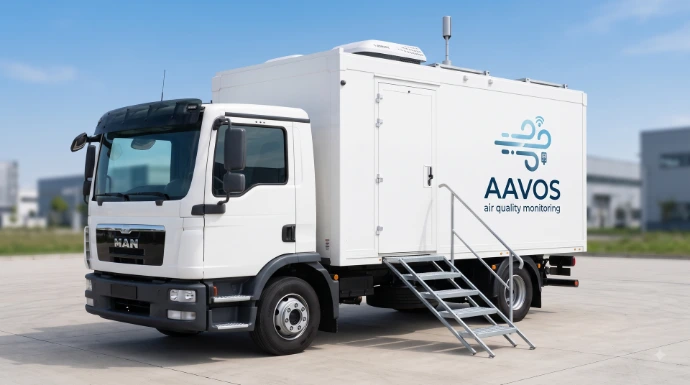
A well-engineered mobile air quality trailer or truck-mounted unit typically needs to address several requirements simultaneously:
- Climate control to keep sensitive instrumentation within its rated operating temperature and humidity range, regardless of external conditions.
- Vibration and shock protection for instruments that were never designed to be transported regularly on public roads.
- Self-contained power, whether through onboard generators, solar arrays, battery banks, or a combination, so the unit can operate at sites without existing grid infrastructure.
- Sample inlet design positioned and engineered to draw a representative air sample regardless of where the vehicle is parked or how it's oriented relative to wind direction.
- Remote data connectivity, allowing operators to retrieve readings without needing to physically visit the unit for every data pull.
- Security and weatherproofing, since mobile units are often deployed unattended for extended periods in locations that may not be secured to the same standard as a permanent industrial facility.
The engineering challenge is rarely any single one of these requirements in isolation — it's integrating all of them into a compact footprint that still leaves enough room for technicians to safely access, calibrate, and maintain the instrumentation inside.
Fixed Shelters and Measurement Cabins
Where a project calls for permanent or semi-permanent monitoring at a single location, a purpose-built shelter or measurement cabin is often the more appropriate solution than a mobile unit. These structures are typically installed once at a fixed site — a fenceline monitoring point, a background air quality station, a location required by a permit condition — and remain there for years.
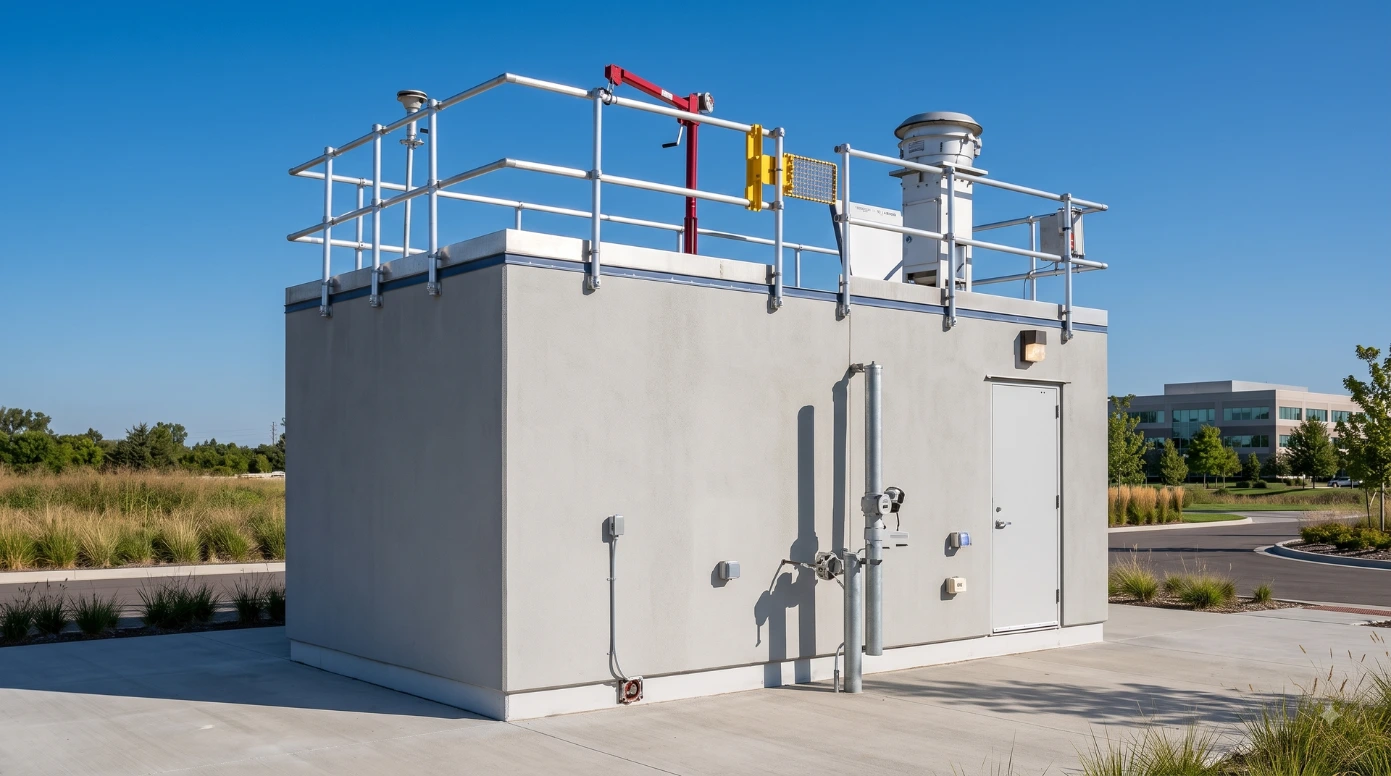
Fixed shelters bring their own set of design considerations. Because they don't need to be transported, they can prioritize different trade-offs than a mobile unit: more generous internal space for multiple instruments and easier maintenance access, more robust and permanent power and network connections, and construction materials and insulation optimized for long-term weather exposure rather than road-transport durability. A well-designed measurement cabin also needs to account for practical realities like instrument rack layout, cable management, condensation control, and straightforward access for routine calibration and filter changes — details that are easy to overlook on paper but make a real difference to how easy the station is to operate over its working life.
Designing Around the Instrumentation, Not the Other Way Around
A recurring theme across both mobile and fixed enclosure projects is that the enclosure should be designed around the specific instrumentation and measurement objectives of the project — not treated as a generic box that instruments get placed into afterward. This means starting the design process with questions like:
- What is actually being measured? Particulate matter, gas concentrations, meteorological parameters, or a combination — each has different sample handling and placement requirements.
- What's the deployment context? A permanent fenceline station, a temporary construction-phase monitoring campaign, or a unit that needs to be redeployed across multiple sites over its lifetime.
- What power and connectivity is available on site? This determines whether the solution needs to be self-sufficient (solar, battery, generator) or can rely on grid power and existing network infrastructure.
- Who will operate and maintain it? A unit that will be serviced by a specialized technician has different accessibility requirements than one that needs to be operable by general site staff.
- What regulatory or reporting framework applies? This can dictate specific requirements around sample inlet height, siting distance from obstructions, or data logging and retention.
Answering these questions up front, before enclosure design begins, is what separates a monitoring station that performs reliably for years from one that requires constant troubleshooting and rework after installation.
The Value of an Integrated Approach
There's a meaningful difference between sourcing instruments from one supplier, an enclosure from another, and integrating them in-house, versus working with a partner who engineers the complete solution — instrumentation, enclosure, power, sampling, and connectivity — as a single integrated system. The integrated approach reduces the risk of mismatches between components (an instrument that draws more power than the enclosure's solar array can supply, for example, or a sample line routed in a way that introduces measurement bias), and it typically results in a faster path from project kickoff to a fully commissioned, reliable monitoring station.
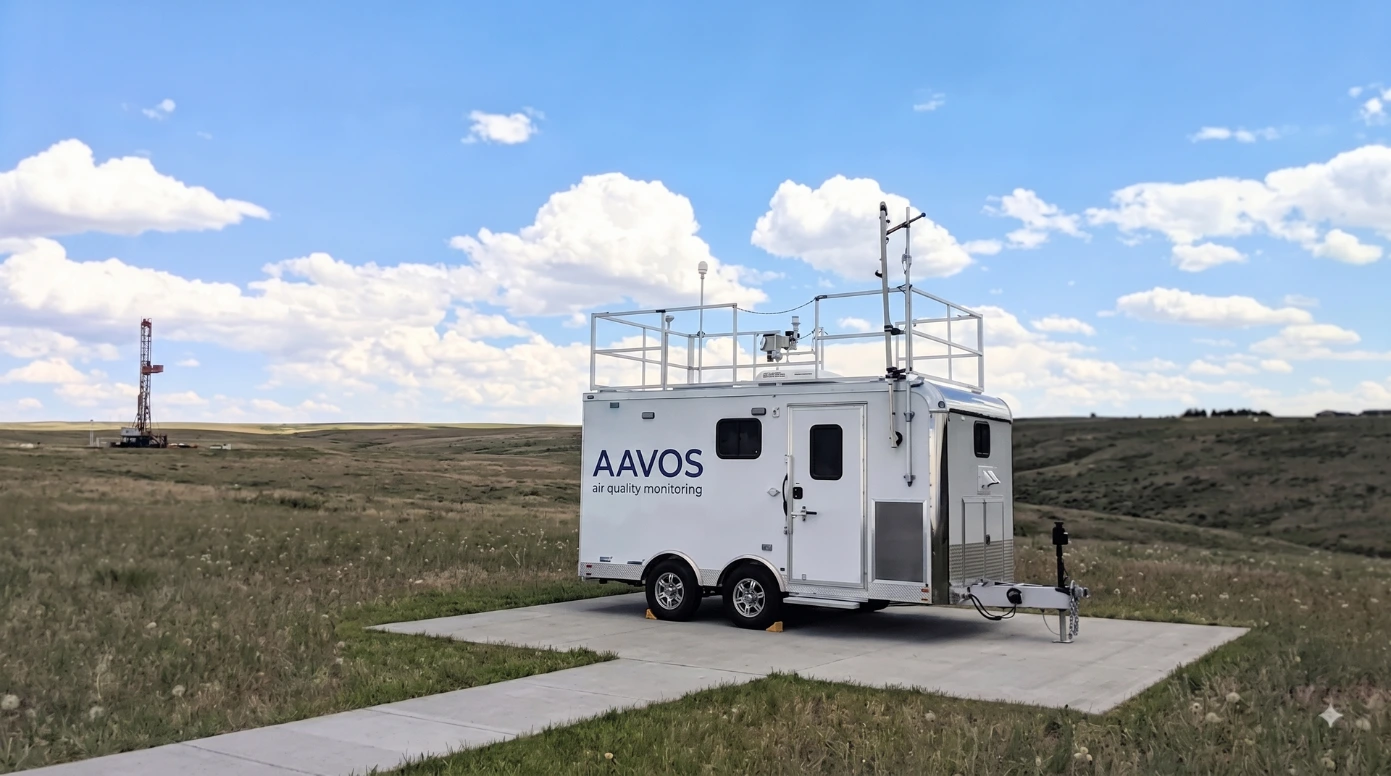
For organizations planning an ambient air quality monitoring program — whether that's a single fixed measurement cabin or a fleet of mobile units deployed across multiple sites — the enclosure and integration engineering deserves the same level of attention as the choice of measurement instrument itself. Getting it right from the outset avoids costly retrofits and ensures the resulting station delivers dependable, representative data for as long as it's in service.
Conclusion
Custom-built trucks, trailers, shelters, and measurement cabins solve a problem that standard equipment cabinets cannot: getting reliable, protected, properly-sampled ambient air monitoring capability to wherever it's actually needed, whether that's a single permanent fenceline station or a mobile fleet redeployed across many sites over time. The best results come from treating the enclosure, power system, and sampling design as integral parts of the monitoring solution — engineered around the specific instruments and objectives of the project — rather than as an afterthought once the instrumentation has already been selected.